

🟩 Forecasts for drone attacks and AI time horizons; China holds military drills around Taiwan and imposes sanctions on US arms manufacturers || Global Risks Weekly Roundup #52/2025


Executive summary
Geopolitics: The US likely covertly struck a facility in Venezuela. China imposed sanctions on American arms manufacturers following the approval of a new US arms package for Taiwan, and China launched live-fire military exercises aiming to encircle Taiwan. Iran is refusing to allow the IAEA to inspect its damaged nuclear sites.
90% (85% to 93%) probability that the US will intervene militarily in a Latin American country in 2026, which could involve airstrikes or strikes from ships, a ground invasion or limited actions on land.
Tech and AI: China is reportedly worried that AI could threaten Communist Party rule in the country but also doesn’t want to overregulate AI and fall behind in a “race” with the US.
8.6% (2.2% to 20%) chance that more than 10 people will die in a drone attack (which could involve multiple drones and either state or non-state actors) in an advanced economy (as defined by the IMF) in 2026. Conditional on such an attack, we also estimate that there is a 16% (6.0% to 30%) chance that more than 100 people would die from a drone attack in 2026.
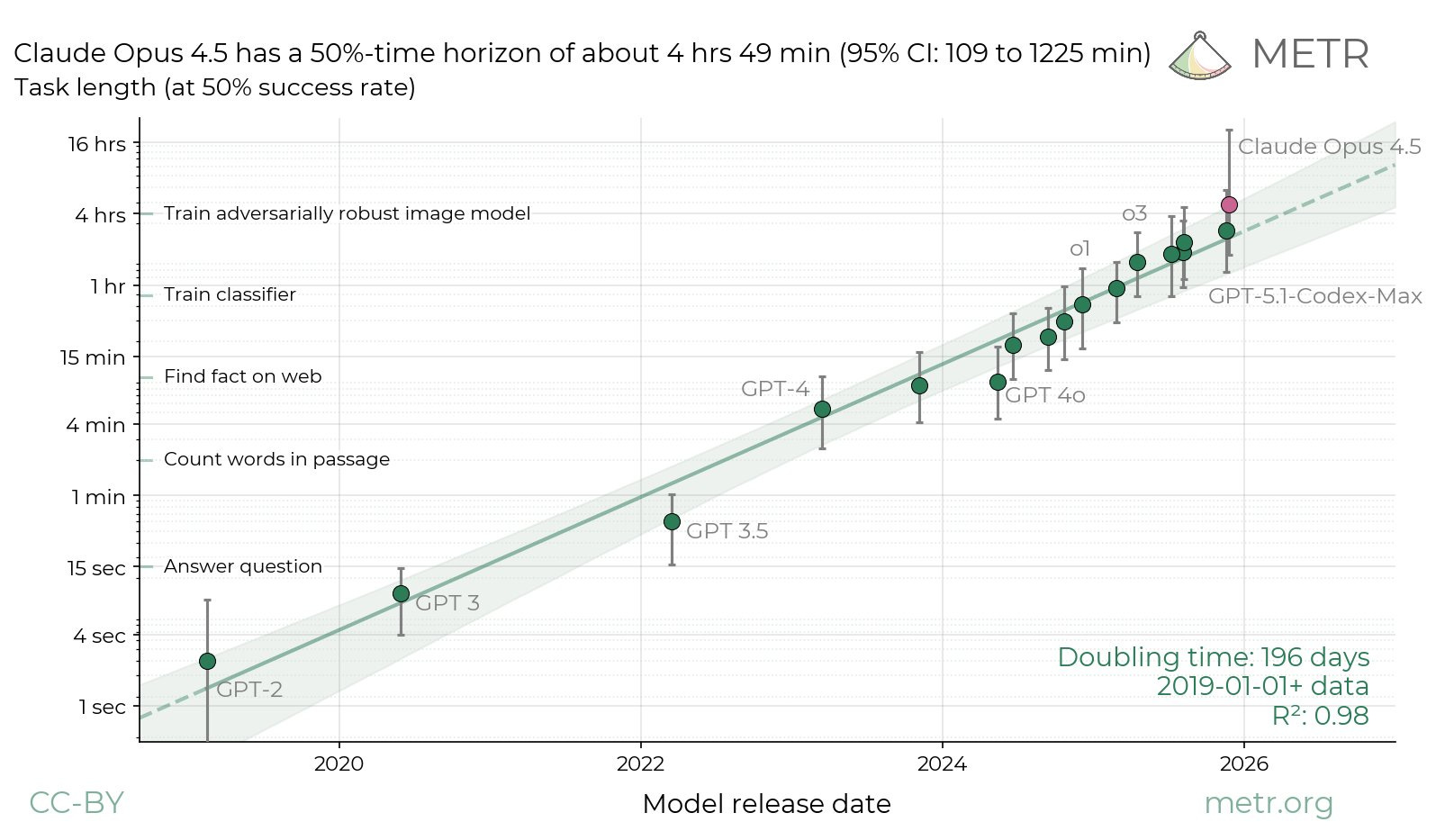
83% (75% to 90%) chance that, on December 31 2026, METR’s coding time horizons (or equivalent) will be on-trend with or above a 7-month doubling trend.
Geopolitics
Europe
Ukraine’s President Zelensky travelled to Florida to meet Donald Trump for talks on how to bring Russia’s war in Ukraine to an end. Ahead of the talks, he indicated that a demilitarised “free economic zone” in the Donbas region would be acceptable to his government as long as Russian forces also pulled back. Both Trump and Zelensky indicated that the meeting went well and that some issues were nearly resolved, but land claims and the status of the Donbas remain sticking points. Zelensky said that the US is willing to provide security guarantees to Ukraine for 15 years, but one forecaster thinks that Russia’s opposition to such guarantees for Ukraine, which it cannot veto, continues to be the main obstacle to a peace agreement. Having said that, Russia says it agrees with Trump that the peace talks are in their “final stages”, although several of our forecasters think it is unlikely that Russia actually seeks peace in the near future
Meanwhile, Russia carried out heavy strikes on Ukraine’s capital Kyiv, killing at least two people, wounding more than two dozen, and leaving hundreds of thousands without power or heating. Poland scrambled its jets as a preventative measure to ensure its airspace was secure, but this has happened on a number of previous occasions.
Two Western intelligence agencies believe that Russia may be developing a new anti-satellite weapon that could damage Starlink satellites with space shrapnel.
A Russian general was killed by a car bomb in Moscow, the third senior Russian military officer to be killed in just over one year.
Asia
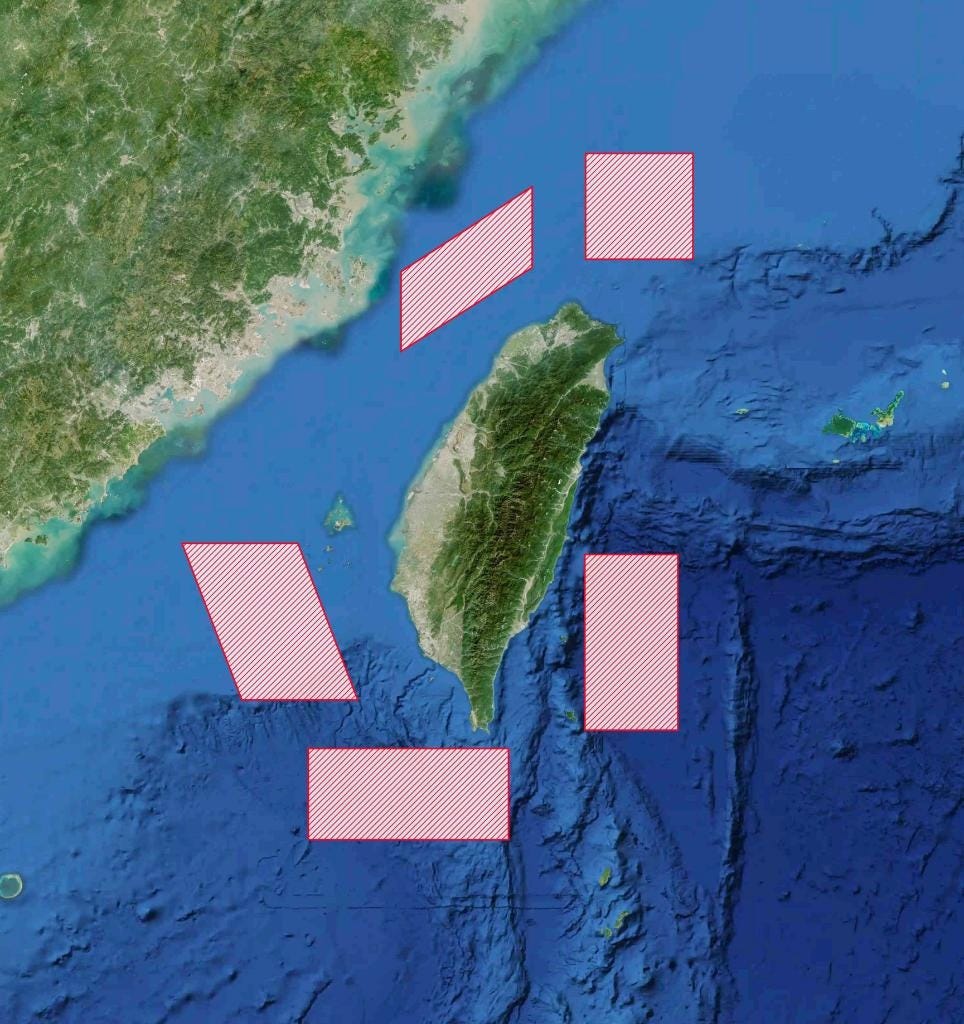
China imposed sanctions on more than a dozen US arms companies, including Boeing, in response to US approval of the largest package of arms sales to Taiwan in history, worth $10-11 billion. It also launched live-fire military drills, its largest drills to date by total area covered, aiming to encircle Taiwan and block its main ports; these drills are perilous because China could potentially launch an invasion or blockade of Taiwan starting with just such a military exercise.
North Korea said that any Japanese attempt to “go nuclear” must be prevented, following a comment from a source in the Japanese Prime Minister’s office that Tokyo needs to possess nuclear weapons. However, lawmakers from both the ruling and opposition parties in Japan condemned the statement and called for whoever made it to be fired.
A renewed ceasefire between Thailand and Cambodia came into effect, following weeks of clashes along the border between the two countries.
Myanmar held the first phase of its scheduled 2025-26 elections, which were widely viewed as a sham. Most candidates are seen as military allies, and some opponents of the ruling military junta were barred from standing as candidates.
China revealed a container ship with containerized military equipment, including vertical launchers, sensors and defense systems. One forecaster estimates these ships could carry “essentially 2/3rds of the capacity of an Arleigh Burke-class destroyer”.
Middle East
Israel carried out further strikes on Hezbollah targets in southern Lebanon, ahead of a deadline (accepted by the Lebanese army) to disarm the group by the new year. The progress of the disarmament process is disputed by Israel and Lebanon.
Iran is refusing to allow the International Atomic Energy Agency (IAEA) to inspect its nuclear sites, supposedly because of a lack of clarity on how inspectors would go about examining damaged sites,such as those struck by Israel and the US earlier this year.
Iran appears to be relaxing some of its social rules (including those relating to the wearing of hijabs), while continuing to crack down on dissent. One organisation opposed to the regime estimates that 357 people were executed from November 22 to December 22 and says that this is a significantly higher number than in the same period in 2024, 2023 and 2022.
The Americas
Latin America
On December 26, while discussing Venezuela during a call in to a talk show, Trump said that the US had struck a drug-related facility on December 24. He said that the US hit “a big plant or a big facility where the ships come from. Two nights ago, we knocked that out. So we hit them very hard.” The New York Times reported that US officials stated that a drug-production facility in Venezuela had been hit, but further details were not provided. Some have wondered whether explosions at a chemical facility in Zulia state could have been caused by this strike, but the chemical facility is inland, while it appears that the facility Trump mentioned may be near a coast. At the beginning of December, we forecast a 69% chance that the US would attack Venezuelan territory by the end of 2025. Currently, we forecast a 90% (85% to 93%) chance that the US will intervene militarily in a Latin American country in 2026.
After several months of ongoing US military flights near Venezuela with transponders on, military flights now appear to be continuing largely with transponders off; OSINT observers continue to hear some flight communications and observe some flights visually. The US military buildup in the Caribbean continued, with additional aircraft and ongoing cargo flights.
A US official has said that the administration’s intention is to apply pressure to the Maduro regime by squeezing oil shipping and revenues, and Venezuelan oil shipments are plummeting. But Stephen Miller, one of Trump’s policy advisors, has urged military action in Venezuela as a pathway to invoking the Alien Enemies Act, in order to facilitate the deportation of several hundred thousand Venezuelan immigrants.
The US is still tracking the sanctioned oil tanker Bella 1, as part of their operations to seize tankers involved in the oil trade with Venezuela. Last week, the Coast Guard ordered the ship to stop, and it refused, resulting in a very low-speed chase while the US gathers more resources to possibly attempt a seizure.
Russia has reportedly begun to evacuate families of diplomats in Venezuela.
United States
The Trump administration has implemented roughly half of Project 2025’s goals in its first year.
Africa
The US launched strikes against Islamic State targets in Nigeria on Christmas Day, claiming that the goal of the strikes was to protect Christians in the country.
More than 300,000 people have reportedly been displaced in Mozambique since July as an Islamic State insurgency expands in the country.
Technology and artificial intelligence
In 2025, terrorists and violent extremists have increasingly used AI to plan, research, and prepare attacks.
Following up on drone attacks in Sudan killing over 100 people in Sudan a few weeks ago, our forecasters estimate that there is a 8.6% (2.2% to 20%) chance that more than 10 people will die in a drone attack (which could include multiple drones, and either states or non-state actors) in an advanced economy (as defined by the IMF) in 2026. Conditional on such an attack, we also estimate that there is a 16% (6.0% to 30%) chance that more than 100 people would die from a drone attack in 2026. Forecasters point out that the historical frequency of such attacks is quite low, but also that they have already happened in Sudan, and that terrorist groups learn from each other and adapt.
The Wall Street Journal reports that, concerned that AI could threaten Communist Party rule, China is taking “extraordinary steps to keep it under control”. The measures implemented may signal a concern in the Chinese government about the controllability of AI. Some forecasters are doubtful that these particular measures will ultimately be effective in solving a deeper alignment/control problem.
OpenAI warns that prompt-injection and AI-hijacking in AI browsers and agents may never be fully solved.
OpenAI made 80 times as many reports to the National Center for Missing & Exploited Children in the first half of 2025 as they did in the same period in 2024. AIs are reportedly “supercharging” child sextortion and self-harm. And deepfake cyberbullying is a growing problem in schools.
Political extremists are using AI voice cloning to produce propaganda, including supporters of neo-Nazi and Islamic State ideology.
Italy’s antitrust authority directed Meta to suspend contractual terms that could close other AI chatbots out of WhatsApp.
New York Times reporter John Carreyrou along with 5 other writers has filed a lawsuit against xAI, Anthropic, Google, Meta and Perplexity on copyright claims.
After time horizons estimates from METR show Claude Opus 4.5 being above the trend of a 7 months doubling time, forecasters estimate an 83% (75% to 90%) to model results continuing at or above the 7 month doubling time trend for 2026, per METR’s own future estimates.
The chief scientist at Redwood Research, Ryan Greenblatt, estimates that Anthropic’s Claude Opus 4.5 has a no-chain-of-thought 50% reliability time horizon of 3.5 minutes and that this time horizon has been doubling every 9 months. Greenblatt says that the ability to solve mathematics problems without any chain of thought (in a single forward pass) could be a proxy for opaque reasoning ability, which could be used by AI models engaging in scheming.
Economy
Silver prices reached all-time highs but have fallen approximately 12% since. New margin requirements have been imposed.
Biorisk
A new study describes how Candida auris, which has developed some resistance to multiple therapies, uses carbon dioxide to survive on the skin and become resistant to therapies.