

🟩 AI unemployment and IPOs in 2026, EU funds Ukraine from its own pockets, US seizes Chinese-owned tanker || Global Risks Weekly Roundup #51/2025


Executive summary
Geopolitics: The EU opted not to use Russian assets either directly or as collateral to fund Ukraine’s defence. The US seized an oil tanker in international waters off the coast of Venezuela and pursued another; one of them was Chinese-owned. The US Congress renewed its military commitments to Ukraine, Taiwan and other allies in Europe and Asia.
They believe there’s a 14% (8% to 25%) chance that there will be a military conflict or incident between Russia and an EU country that results in more than 10 fatalities by the end of 2026.
They think there’s a 60% (55% to 69%) probability that the US will attack Venezuelan territory in Q1 2026.
They think there’s a 64% (40% to 79%) probability that the Democrats will win control of the US House of Representatives after the 2026 midterms.
Tech and AI: METR found that Claude Opus 4.5 has the highest measured time horizon on their suite of multi-step software and reasoning tasks, at around 4 hours and 49 minutes. A former DeepMind Director of Engineering thought, very likely incorrectly, that he had solved a Millennium Prize problem with AI assistance, potentially in an example of AI psychosis/AI-catalyzed hubris.
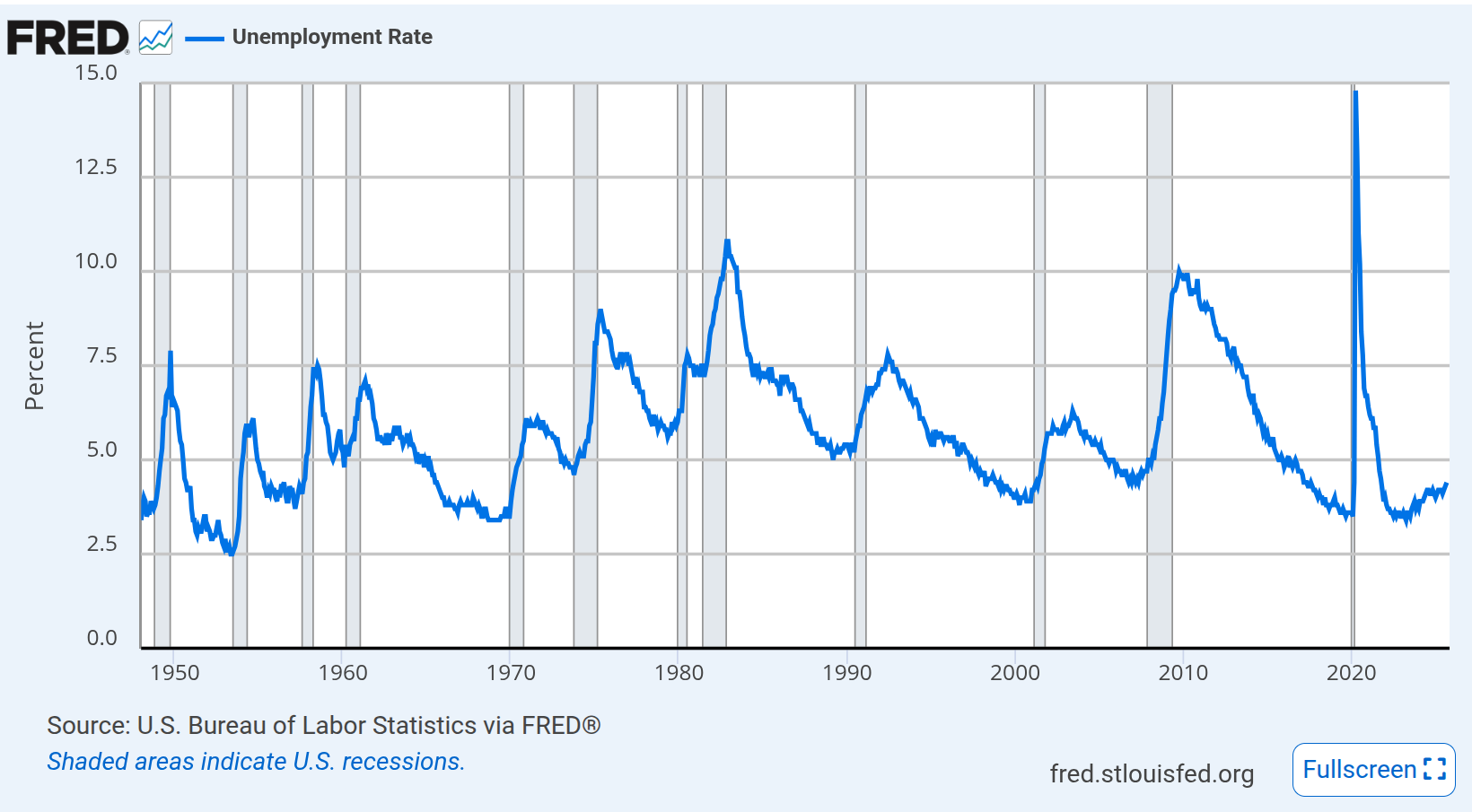
Forecasters think there’s a 5.7% (3% to 15%) chance that the US unemployment rate will rise above 10% at any point in 2026.
They think there’s a 44% (39% to 50%) probability that a major AI lab will hold an IPO.
Biorisk: Forecasters estimate there’s a 5.1% (3% to 7%) chance that the World Health Organization will declare a new pandemic in 2026.
Geopolitics
Europe
The EU agreed to loan €90bn to Ukraine, but opted not to use frozen Russian assets either directly or as collateral; their loan will instead be secured against EU borrowing. As a result, the UK also refrained from using Russian assets in that way. We gave this outcome a 77% chance, in aggregate, last week.
Russian President Vladimir Putin called European leaders “pigs” and said that Russia would “liberate its historic lands” through military force if necessary. Meanwhile, Reuters reports that US intelligence agencies continue to assess that Putin hopes to occupy all of Ukraine – and also to seize former Soviet territory in Europe.
Ukrainian drones hit a tanker in Russia’s “shadow fleet” in neutral waters in the Mediterranean.
Swedish authorities boarded a sanctioned Russian vessel off their coast.
Estonian authorities say that Russian border guards crossed into Estonia for unclear reasons.
The Americas
Latin America
The US struck six more alleged drug-trafficking boats last week. At least 104 people total have been killed in US strikes on alleged drug-trafficking boats.
US President Trump declared a “blockade” of all sanctioned oil tankers sailing to or from Venezuela. He justified the partial blockade in part with the claim that Venezuela had taken US oil company assets, and demanded that Venezuela should “return to the United States of America all the Oil, Land and other Assets that they previously stole from us.”
The US seized a second, Panama-flagged, Chinese-owned tanker carrying 1.8M gallons of Venezuelan oil to China in international waters near Venezuela; the tanker was not sanctioned by the US. The US Coast Guard pursued a third, US-sanctioned tanker on Sunday as well. Last week, we gave the seizure of a second tanker related to Venezuela a 38% chance of happening before the end of January 2026.
After the US seized a first tanker last week, several tankers headed for Venezuela turned around, and buyers of Venezuelan oil wanted discounts and contract changes. Nonetheless, TankerTrackers.com reports that Venezuelan crude oil exports were largely unchanged through Friday, because 60% of “Dark Fleet” tankers are not under US sanctions and are readily available to ship Venezuelan oil. However, the seizure of a tanker that is not sanctioned by the US could start to cause Venezuelan oil shipments to fall.
Satellite imagery and tracking data show that the US continues to build up its air presence around the Caribbean and South America, with naval and air bases in Puerto Rico officially reopening after two decades of closure. Last week, twelve F-35A fighter jets from the Vermont National Guard’s 158th Fighter Wing arrived in Puerto Rico; 20 F-35 fighter jets have now been seen on a tarmac in Puerto Rico. In addition, a USAF EC-130H Compass Call plane, which is used for electronic warfare, appears to have arrived in Puerto Rico. More KC-135 Stratotanker air refueling tankers have deployed to the Caribbean, the number of KC-135s at MacDill Air Force Base in Florida has doubled, to 28, and cargo flights into the area are ongoing. US military flights near Venezuela continue daily.
Overall, forecasters believe there’s a 60% (55% to 69%) chance that the US attacks Venezuelan territory in the first quarter of 2026; we are still above 50% but less sure now because attacks haven’t happened yet. Maduro is unlikely to step down in the absence of a full invasion force, but the Trump administration doesn’t currently appear to have any intention of conducting a full military invasion of Venezuela, so tensions continue without a clear endpoint in sight.
United States
The US Congress passed the 2026 National Defense Authorization Act, which, among other things, commits to minimum troop numbers inEurope and in South Korea, as well as continued assistance to Ukraine.
Disruption to the Bureau of Labor Statistics and its data collection processes following the government shutdown and the firing of its previous head may have contributed to what many consider to be a bizarre CPI read for November 2025. It appears to assume no inflation in housing or shelter costs, for example. Forecasters are worried that the statistics used to drive government and fiscal policy choices are becoming unanchored.
More Epstein files were released by the Department of Justice following the success of a discharge petition in Congress, but they were criticised for being heavily redacted. They feature photographs and other materials related to Donald Trump, Andrew Mountbatten-Windsor, Bill Clinton and others.
Trump signed an executive order designating fentanyl as a weapon of mass destruction. This was likely done to give the administration legal cover to order military strikes against drug-trafficking targets. Most fentanyl in the US comes from Mexico; however, because Trump has claimed that fentanyl comes from Venezuela, it is possible that the Trump administration may try to use the declaration to provide a legal basis for the US military to strike targets in Venezuela. The administration could also consider using this declaration as a basis for striking targets elsewhere.
The Washington Post reports that Secretary of War Pete Hegseth plans to carry out the most major reorganization of the largest US military commands in decades. The plan would place Central Command, European Command and Africa Command under the control of a new International Command, and it would place Southern Command and Northern Command under a new Americas Command, or “Americom.”
Trump signed an executive order that aims to ensure that America has “space superiority”.
Looking forward to the midterms next year, forecasters think there’s a 64% (40% to 79%) probability that the Democrats will win control of the US House of Representatives in the 2026 midterms. They emphasize that power changes in the midterms are common, but also note that the Trump administration could implement fiscal or governance measures to reduce the Democrats’ chances.
Middle East
The Israeli government approved 19 new settlements in the occupied West Bank, with Finance Minister Bezalel Smotrich saying that the aim is to prevent the Palestinians from developing a viable state. Saudi Arabia, which Trump hopes will normalize relations with Israel, condemned the move.
Israel is reportedly consulting with the United States about the prospect of fresh attacks on Iran. Israeli Prime Minister Benjamin Netanyahu also refused to rule out targeting Ayatollah Khamenei.
Israel launched new strikes on Lebanon, targeting Hezbollah operatives.
The US conducted over 70 strikes on ISIS targets in Syria, in retaliation for an ISIS attack in Syria that killed two US soldiers and one civilian interpreter.
The Integrated Food Security Phase Classification, a UN-backed hunger monitor, says that Gaza is no longer in famine because of improved access to humanitarian aid.
Asia
China told the US to stop arming Taiwan, following US Congressional approval of an $11B weapons sale.
Pakistan’s Deputy Prime Minister said that “unusual, abrupt variations” in water flow were recently detected in the Chenab River, and linked this to India’s withdrawal from the Indus Waters Treaty back in April, accusing India of “weaponizing water”.
Technology and artificial intelligence
Model Evaluation & Threat Research (METR) evaluated Claude Opus 4.5 on multi-step software and reasoning tasks. The organization found that the model has a 50%-time-horizon point estimate of around 4 hours and 49 minutes, their highest estimate to date for a model. However, forecasters debate the degree to which this will translate into real-world outcomes, including in the economic and catastrophic risk domains.
Forecasters estimate that there’s a 5.7% (3% to 15%) chance that US unemployment will rise above 10% at any point in 2026, which might be considered a moderate proxy for the impact of AI on the labor market. The higher end of that range is also driven by the cyclical nature of the US financial system and unemployment numbers, as well as by the tricky position the US Federal Reserve finds itself in after years of US government borrowing.
China reportedly built a prototype of an extreme ultraviolet lithography (EUV) machine using a team of former engineers from the Dutch company ASML, the world leader in such technology. Advanced lithography is a crucial step in making the most advanced semiconductor chips such as those produced by the Taiwan Semiconductor Manufacturing Company (TSMC). There is a spectrum between a Frankenstein monster machine produced with stolen parts and a de novo effort that can be scaled up, and forecasters are uncertain about where in that spectrum this prototype lies—but this deeply matters for how long it will be until China has access to more advanced AI chips at scale.
New York governor Kathy Hochul signed New York’s RAISE Act into law, which would require AI companies to create and follow safety plans and transparency rules.
A former Director of Engineering at DeepMind was publicly exhibiting signs of very erratic behavior, thinking he had solved the notoriously difficult Navier-Stokes problem, potentially in an example of what is now called “AI pychosis”, or perhaps “AI-catalyzed hubris”.
Senator Bernie Sanders announced he’ll be pushing for a moratorium on the construction of new AI datacenters, which are “powering the unregulated sprint to develop & deploy AI”. He also expressed concerns about growing anti-AI regulation lobbying efforts, with two super PACs having been established in recent months.
And: GPT-5 can help experts do novel wet lab work. A report claims AI-generated code contains 1.7x more bugs than human code. An autonomous code analyzer reportedly beat all human teams in an open-source software zero-day competition. OpenAI and Anthropic are rolling out new methods to detect underage users. A UK report says a third of UK citizens have used AI for emotional support or social interaction.
Biorisk
A group of Indian scientists attempted to predict how bird flu could spread to humans. Their simulations show a very narrow window for containment: quarantining households when only about two cases are detected could almost certainly contain spread, but by the time roughly 10 detected cases exist, the infection would be likely to have moved beyond primary and secondary contacts and would be much harder to control without severe measures.
Looking at 2026, forecasters estimate that there is a 5.1% (3% to 7%) chance that the WHO will declare any new pandemic in 2026, not deviating very far from the historical baserate.
Thanks for the update!
"They believe there’s a 14% (8% to 25%) chance that there will be a military conflict or incident between Russia and an EU country that results in more than 10 fatalities"
By which date?
"Looking at 2026, forecasters estimate that there is a 5.1% (3% to 7%) chance that the WHO will declare any new pandemic in 2026, not deviating very far from the historical baserate."
Since Evo 2 was released in February 2025, and other models now for the first time in history can significantly enhance the capabilities of potential bioterrorists, why continue relying so heavily on historical base rates?
Would it have made sense to stick closely to historical base rates for WMDs after Trinity?