

🟩 Renewed US-Iran negotiations, OpenAI and DeepMind models solve Erdos problems, Ebola deaths increase || Global Risks Weekly Roundup #21/2026


Executive summary
Geopolitics: Trump said that a deal with Iran to reopen the Strait of Hormuz is near. Rubio called Cuba a leading state sponsor of terror and questioned whether diplomacy with the regime would work.
Will the US carry out a strike on Cuba’s territory by the end of July 2026? Our forecasters think there’s a 34% (20% to 50%) chance.
Biorisk: The number of suspected deaths in the current Ebola outbreak has exceeded 200.
How many suspected deaths will there be due to the Ebola outbreak by the end of June and by the end of 2026? Our forecasters’ aggregate 90% confidence intervals are 870 to 18K and 3.5K to 200K respectively.
Will there be more than 10 recorded cases of Ebola in the US and Europe by the end of 2026, including imported cases? Our forecasters think there’s a 68% (50% to 85%) chance.
Technology and AI: Trump held back from signing an executive order encouraging AI labs to have their models reviewed by the US government prior to release. OpenAI said that a general-purpose model has autonomously solved an Erdos problem, while DeepMind said one of its models has solved nine of them. Forecasters also discussed the short-term impact of advances in robotics on the jobs market:
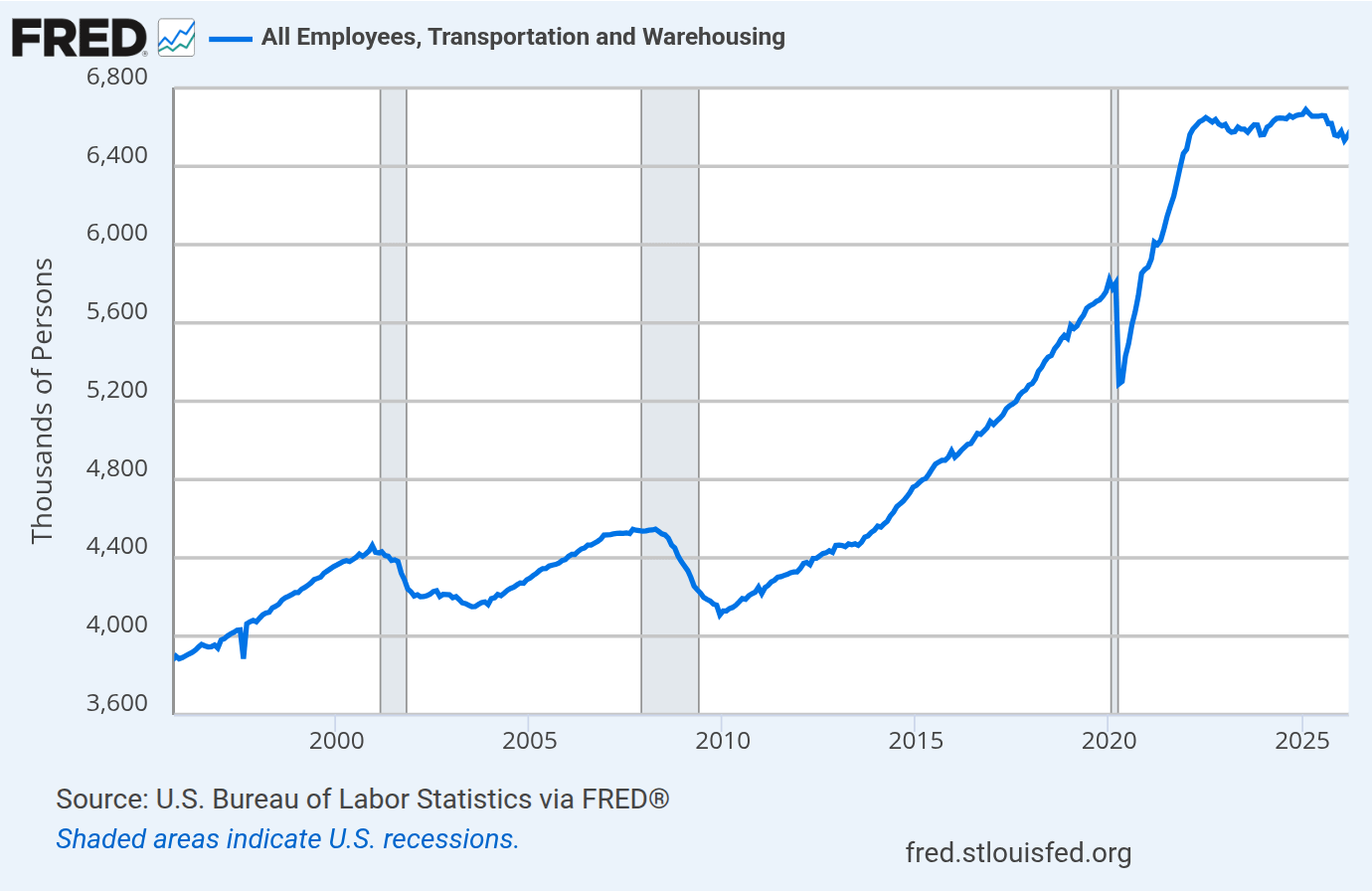
What will be the number of jobs in transportation and warehousing in the United States by the end of 2026, according to FRED? Our forecasters’ aggregate 90% confidence interval is 5.87M to 6.66M
Economy: Oil and natural gas prices opened lower on Monday following reports that a US-Iran deal could be close.
Will shipping traffic in the Strait of Hormuz have returned to over 50% of pre-war levels on July 1, 2026? Our forecasters believe there’s a 47% (37% to 65%) chance.
Geopolitics
Middle East
Trump claimed that a deal with Iran to reopen the Strait of Hormuz is close, though he later said he wouldn’t rush into a bad deal amid criticism of the reported outlines of the deal from hawks in the Republican Party. These terms reportedly include a 60-day ceasefire extension and the end of the US blockade of Iranian ports in exchange for the reopening of the Strait. Other issues on the table that could be negotiated later include the unfreezing of Iranian assets, sanctions relief and limits on Iran’s nuclear program. One forecaster writes:
“Oil markets are really low right now, Brent is at 96.53 as I write this, suggesting that the market is again optimistic about an end to the conflict. If the strait suddenly reopens, there would be a backfill, which might temporarily bring the numbers up for a while.”
Pakistan deployed sixteen aircraft and thousands of troops to Saudi Arabia during the Iran War, which suggests that their mutual defense pact is having a real-world impact.
Europe
Russian fighter jets almost hit British reconnaissance aircraft over the Black Sea.
Russia struck Ukraine with one of its hypersonic ‘Oreshnik’ missiles.
Asia-Pacific
The US paused a $14 billion arms sale to Taiwan, with US navy chief Hung Cao saying this is due to the Iran War. Forecasters generally think that Trump’s recent visit to China may have also influenced the decision, however.
During the US-China summit, Xi Jinping reportedly raised concerns about Japan’s “remilitarization”.
The Americas
Latin America
US Secretary of State Marco Rubio said that Cuba is a “leading state sponsor of terrorism” and warned that the likelihood of a peaceful settlement with the country is “not high”. Our forecasters think there’s a 34% (20% to 50%) chance that the US will strike Cuban territory by the end of July 2026.
Former Cuban leader Raul Castro was indicted on murder charges in the US. Forecasters write:
“A lot of signs are pointing in this direction, but the timing is uncertain. The US wants to see fundamental change in governance in Cuba, but those in charge in Cuba have been unwilling to yield to diplomatic and economic pressure from the US. Rubio has recently been making the case for US intervention, and the US military has been making preparations for a possible intervention. Regime change in Cuba is of central importance to Rubio, and Rubio will probably get his way, as regime change in Cuba is in alignment with the idea of a US sphere of influence, and also with the idea of trying to prevent mass migration from Cuba as a consequence of its ongoing economic collapse, which would be Stephen Miller’s highest priority. Overall, it seems extremely likely to me that the US will intervene militarily in Cuba at some point this year, but military preparations and diplomacy take time, and intervention could well occur later in the year.”
“There is a lot of talk and it would not be surprising, but the time period is short. Cuba can prolong talks. I’m unsure whether it will be used as a diversion from Iran or whether the quagmire of the Iran war will serve as a cautionary tale.”
The United States
Tulsi Gabbard, the Director of National Intelligence, announced her resignation from the position, citing a need to support her husband, who has a rare form of bone cancer.
An industrial tank in Garden Grove, California containing methyl methacrylate is leaking and could possibly explode. 40,000 people are under evacuation orders.
Technology and artificial intelligence
Trump held back from signing an executive order that would likely have encouraged but not mandated AI labs to have their frontier models reviewed by the US government prior to release, hours before he was expected to approve it. This was because of concerns that it would have held the US back in the “AI race” against China.
A general-purpose OpenAI model disproved a central conjecture in discrete geometry, thereby solving one of Paul Erdos’ mathematical problems. Google DeepMind, meanwhile, said that their AlphaProof Nexus model autonomously solved nine of Erdos’ 353 open problems.
Anthropic hired OpenAI co-founder Andrej Karpathy to lead a team looking into recursive self-improvement (RSI). The hire suggests that Anthropic may be ahead of OpenAI in this area. OpenAI is also hiring staff to work on RSI.
Model Evaluation and Threat Research (METR) released a report on whether AI companies could lose control of their own AI agents, finding that the agents currently lack the ability to prevent humans from shutting them down or blocking their plans.
Elon Musk lost his case against OpenAI after the jury tossed out his lawsuit on the basis that the statute of limitations had expired. In January 2026, we estimated that there was a 69% chance that Musk would not get more than $40 billion in his case.
OpenAI is preparing for an Initial Public Offering (IPO).
Our forecasters also discussed the short-term impact of advances in robotics on the jobs market. Their aggregate 90% confidence interval for the number of jobs in transportation and warehousing in December 2026, according to FRED data, is 5.87M to 6.66M, from a current level of 6.58M. They expect economic fallout from the war in Iran to drive those numbers down slightly but don’t expect impacts from automation to significantly drive those numbers down so fast.
Biorisk
The number of suspected deaths in the recent Ebola outbreak in the Democratic Republic of the Congo (DRC) and Uganda now exceeds 200. There are now over 900 confirmed and suspected Ebola cases in the Eastern DRC. Uganda has confirmed 7 cases, and the head of the Africa CDC said that 10 additional countries are at risk: Angola, Burundi, the Central African Republic, the Republic of Congo, Ethiopia, Kenya, Rwanda, South Sudan, Tanzania and Zambia.
With a doubling time of approximately 14 days (range, 7-21 days), we can expect explosive growth in cases in the densely populated Eastern region of the DRC that has been the seat of conflict since the Rwandan genocide in 1994, most recently between the Congolese government and the Rwanda-backed M23 rebels.
While the DRC and Uganda are both experienced at controlling Ebola outbreaks, it will be much harder to control the outbreak in the Eastern DRC than in Uganda because of the ongoing conflict. Contact tracing is currently only reaching about a fifth of identified case contacts in the DRC. In addition, public resistance to medically safe burial practices needed to contain spread of the virus have erupted in attacks on at least three healthcare facilities in the DRC; 25 patients fled one hospital after two attacks over the weekend.
Containment is especially difficult without help from a vaccine as of yet. The current outbreak is caused by the Bundibugyo ebolavirus, for which no specific vaccine currently exists; existing vaccines against the Zaire ebolavirus may offer little to no protection against Ebola disease caused by the Bundibugyo ebolavirus, which is a different species of virus. Genetic data suggest that the outbreak resulted from a single spillover event into humans.
However, two vaccines against the Bundibugyo ebolavirus are in development and could be available within months. One antiviral and three antibody-based treatments are also in the works, and production of two existing diagnostic tests is being ramped up to expand testing capabilities. When one or more vaccines become available, ring vaccination will be an important strategy, alongside standard public health measures, for controlling the outbreak.
Overall, our forecasters’ aggregate 90% confidence intervals for the number of deaths of confirmed and suspected cases in the Ebola outbreak by the end of June and the end of 2026 are 870 to 18K and 3.5K to 200K respectively. We also think that there’s a 68% (50% to 85%) that there will be more than 10 recorded Ebola cases (imported or acquired) in the US and Europe by the end of 2026. In the 2014-2016 Ebola outbreak, there were at least 19 such cases in 2014.
Forecasters discussed whether the outbreak could become a pandemic. On the one hand, the environment might be significantly worse than in 2014 due to further wars, and lack of appetite for US involvement, so we might get a substantially worse outbreak even if the virus stays mostly the same. On the other hand, it seems exceedingly unlikely that Ebola would mutate to become airborne. Forecasters write:
“While growth is seemingly vertical right now, that is in part due to more cases being brought to light since the outbreak was discovered. However, with a doubling rate of ~14 days (7-21 days), poor containment and population resistance to public health measures needed to reduce spread (e.g., at least 3 incidents with crowds at treatment centers so far), we can expect to see explosive growth. As of Sunday, there were about 230 deaths to date. A doubling time of 14 days would bring us to 1437 deaths by June 30, but I’ll project that higher, to 1800, as I think health workers are still discovering new pockets of disease in the community. Right now, growth is still very exponential. By the end of the year, I expect that the outbreak will largely be under control, although cases may well continue another 1-2 years. I’m not sure how large the outbreak could get, but I fear it could get very large.”
“One US doctor with a confirmed infection is currently being treated in Germany. It seems likely to me that at least 9 more people with Ebola will travel to Europe or the US by the end of the year, given the expected explosive growth in cases. During the 2014-2016 Ebola outbreak, at least 9 confirmed cases were reported in Europe and 11 in the US (and possibly more). There are already more confirmed and suspected cases in the DRC and Uganda now than there were at the same time of year in West Africa in 2014, and all but one of the cases in the US and Europe during that outbreak occurred in 2014. It seems unlikely to me that this outbreak will be brought under control faster than that one, especially without a specific vaccine, but it is possible.”
“This is likely to be much worse than the 2014 West African epidemic because of even worse civil strife and distrust of doctors and aid workers. There currently isn’t a vaccine, and the US is unlikely to mobilize thousands of aid workers like they did in 2014. Undercounting will be an issue.”
A total of 12 cases and 3 deaths have been reported to the WHO as of May 24 in a hantavirus outbreak that began on a cruise ship. The director of the WHO said that more than 600 contacts are still being monitored in 30 countries, and a small number of high-risk contacts still remain to be found. One forecaster thinks that the outbreak is unlikely to grow substantially further.
Economy
Oil markets reacted favorably to the news that a peace deal could soon be reached between the US and Iran.
Iran claims it allowed 26 vessels to transit the Strait of Hormuz in a 24-hour period last week, while Lloyd’s List reported at least 54 transits last week: about double that seen in the previous week.
Taking this and the prospect of a US-Iran deal into account, our forecasters believe there’s a 47% (37% to 65%) that shipping traffic in the Strait of Hormuz will have returned to over 50% of pre-war levels on July 1, 2026. This would require the 7-day moving average to hit at least 52 according to the IMF’s PortWatch.
Hello.
"What will be the number of jobs in transportation and warehousing in the United States in 2026, according to FRED? Our forecasters’ aggregate 90% confidence interval is 5.87M to 6.66M"
Nitpick. "December 2026", not "2026". You may also want to add "from a current level of 6.58M".
The 47% on Hormuz feels a little high to me, mostly because of the threshold. A deal or reopening headline is one thing; getting the 7-day MA back to 52 transits by July 1 is another. Even if the Strait reopens cleanly, rerouted tankers, potential de-mining, war-risk insurance, and charter reshuffling won’t unwind overnight.