

🟩 US and China discuss AI guardrails, Ebola declared a Public Health Emergency, Trump and Iran trade barbs || Global Risks Weekly Roundup #20/2026


Executive summary
Technology and AI: The US and China discussed AI guardrails to mitigate risks from frontier AI models.
Will the US and China publicly announce a bilateral AI arrangement before 2027 in which both governments state or clearly imply reciprocal expectations, commitments, rules, or norms governing AI development, deployment, security, or military use? Our forecasters believe there’s a 21% (15% to 35%) probability.
Before 2027, will the US publicly support creating or moving toward an international AI governance body with an IAEA-like role that includes China? Our forecasters think there’s a 8.7% (5% to 15%) chance.
Biorisk: A new Ebola outbreak was declared a Public Health Emergency of International Concern by the World Health Organization.
As of June 13, 2026, what will be the cumulative total number of recorded deaths linked to the Ebola Bundibugyo outbreak first confirmed in Ituri Province, Democratic Republic of the Congo, in May 2026? Our forecasters’ aggregate 50th percentile estimate is 208 (185 to 230).
Geopolitics: Donald Trump again warned Iran to agree to a peace deal quickly, and shared an AI-generated image of him pressing a red button with a mushroom cloud in the background.
By June 18, 2026, will the United States or Israel carry out three or more strikes against targets inside Iran? Our forecasters think there’s a 63% (49% to 90%) chance.
Economy: Bond yields are rising around the world. A shortage of Group III base oils resulting from the Iran war is expected to cause shortages and price increases in markets for industrial lubricants, including motor oil, in the coming weeks and months.
What will be the highest BLS urban consumer price index value for Motor oil, coolant, and fluids for any month from April 2026 through July 2026? Our forecasters’ aggregate 50th percentile estimate is 598 (540 to 834), relative to a May 2026 value of 476.
Geopolitics
Middle East
Trump and Iran rejected each other’s peace proposals. Trump later warned Iran to agree to a peace deal “or there won’t be anything left of them”, and subsequently shared an AI-generated image of him pressing a red button with a mushroom cloud in the background. Iran, in turn, said that it would respond to the “slightest mistake” by the US and submitted its latest peace proposal to Pakistan. Our forecasters think there’s a 63% (49% to 90%) probability that the US or Israel will carry out three or more strikes against targets in Iran by June 18, 2026.
Saudi Arabia and the UAE carried out previously unreported attacks on Iran, making them direct combatants in the regional conflict.
Europe
US Secretary of Defense Pete Hegseth cancelled the deployment of 4,000 troops to Poland.
Kyiv launched 1300 drone strikes around Moscow this weekend, hitting oil refineries and industrial plants. This was the largest attack by Kyiv on the Moscow region, and it is significant because it shows that even the most heavily defended areas are vulnerable to Ukraine’s attacks.
The Americas
Latin America
The CIA director reportedly travelled to Cuba to meet with Cuban officials to discuss intelligence cooperation, the Cuban economy and security issues. The meeting likely involved CIA officials to pressure Cuba to reduce intelligence and military cooperation with China and Russia; US officials demanded that Cuba cannot be a “safe haven for adversaries in the Western Hemisphere“. That the publicly reported meeting occurred highlights the increasingly dire energy situation in Cuba, which is causing power outages and economic collapse.
One of the Cuban officials that US officials met with was Rodríguez Castro, a grandson of Raúl Castro, Cuba’s former leader, even as Raúl Castro himself faces potential indictment in the US. Rodríguez Castro has previously met secretly with US Secretary of State Marco Rubio as well, which suggests that Rodríguez Castro is becoming an increasingly powerful power broker in Cuba and may also be someone US officials feel that they can work with in their push towards regime change in Cuba.
Our sources from and in Cuba write:
Small protests have become commonplace in Havana. The government used to be extremely wary of any public dissent, responding with quick repression anytime a protest arose. Now the strategy has shifted: they let the protests happen, then send the DTI (Departamento Técnico Investigativo) afterward to pick up the people who started them.
One consequence of the government’s loosening grip is that blackouts in the capital are now nearly as long as in the interior. Havana has gone up to 30 hours without electricity; parts of the countryside, up to 72. On average, Havana and provincial capitals get around 3–4 hours of power a day. The rest of the country gets about 2. The Minister of Electricity and Mines appeared on state television and said the situation is going to get worse, and there is nothing they can do about it for now. The government is shifting focus to “extracting and using domestic Cuban oil”, but it’s too high in sulfur content to be a practical solution.
It has become more common to see solar panels on regular houses. Some are imported by private businesses or individuals; others come through state employers, which in Cuba spans nearly all industries, not just what other countries would consider “government work“.
Most universities are stopped or partially stopped. The exceptions are the Universidades de Ciencias Médicas, which continue to operate. There are no graduation ceremonies expected. There is no expectation of resuming regular academic activities by September, which means no one sees improvement on the horizon.
Everything that isn’t a core economic activity has shut down. MiPyMEs (small and medium private businesses) are still operating. Research centers are stopped. There are rumors that foreign investments and donations originally directed to those centers are being redirected to purchase basic essentials for the general population.
The United States
A new US military wargame series began by simulating a nuclear weapon in orbit.
Donald Trump shared an AI-generated image of him walking next to an alien.
The Supreme Court rejected Virginia Democrats’ congressional district map, dealing another blow to the Democratic party in legal battles over redistricting in advance of the midterm and presidential elections.
Asia-Pacific
Trump and other US officials visited China. Following the visit, Trump warned Taiwan against formally declaring independence.
Africa
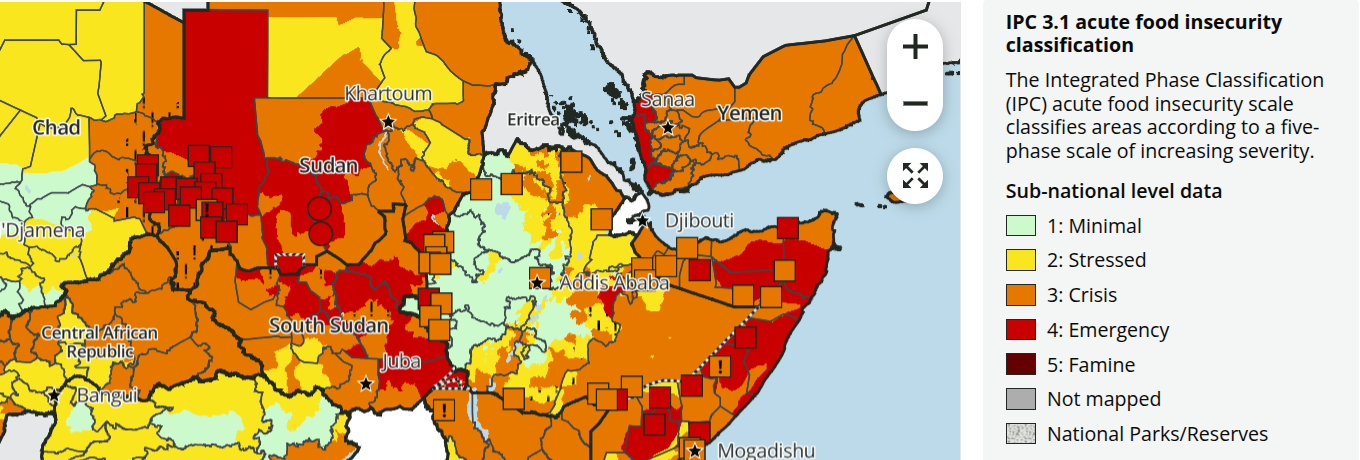
Somalia is facing its worst-ever drought, whose effects are exacerbated by the Trump administration’s aid cuts and the Iran War.
The IPC is warning about acute food insecurity and famine in Sudan:
Although the latest IPC analysis did not identify areas currently experiencing Famine (IPC Phase 5), conditions remain extremely concerning. The analysis shows that nearly 135,000 people are facing Catastrophic food insecurity (IPC Phase 5) across 14 hotspots in Darfur, South Darfur, and South Kordofan are at risk of famine in the coming months. More than five million people are classified under IPC Phase 4 (Emergency) and a further 14 million people are in IPC Phase 3 (Crisis). Conditions are expected to deteriorate further during the lean season between June and September.
Technology and artificial intelligence
During Trump’s visit to Beijing, the US and China discussed AI guardrails to mitigate risks from the most powerful AIs. Trump said they talked about possibly working together on this, though nothing concrete was agreed. One forecaster suggests this is a candidate for the most positive news story of the year so far.
Our forecasters think there’s a 21% (15% to 35%) chance that the US and China will publicly announce a bilateral AI arrangement before 2027 in which both governments state or clearly imply reciprocal expectations, commitments, rules, or norms governing AI development, deployment, security, or military use, and a 8.7% (5% to 15%) probability that the US will publicly support creating or moving toward an international AI governance body with an IAEA-like role that includes China before 2027.
On cyberattacks: OpenAI launched “Daybreak”, its equivalent of Anthropic’s Project Glasswing. Unlike Anthropic, OpenAI is offering access to its GPT-5.5-Cyber to some European firms. Google disrupted hackers who attempted to use AI to exploit a previously unknown major vulnerability. Palo Alto Networks said that using Mythos Preview and GPT-5.5-Cyber, they found 7 times as many vulnerabilities as the previous month. The Pentagon is using Mythos to patch vulnerabilities across US government networks.
And: Pope Leo set up an AI study group. The US Commerce Department deleted from its website details about the government’s recent deals with Google, xAI, and Microsoft on pre-deployment testing. Elon Musk’s attorney discussed the existential risks arising from artificial intelligence in the Musk-OpenAI case.
Biorisk
An Ebola outbreak in the Democratic Republic of the Congo and Uganda was declared a Public Health Emergency of International Concern (PHEIC) by the World Health Organization. So far, there have been 80 deaths and over 300 suspected cases.
Forecasters note that no specific tests, therapies or vaccines are available for the particular species of Ebola virus that is causing the outbreak; existing Ebola vaccines are unlikely to offer much, if any, protection against this species but will be provided if they are found to be useful. Along with the fact that the virus is spreading in a large, dense, urban border area, a potential inability to contain the outbreak with ring vaccination could make the outbreak harder to contain than the 2013-2016 outbreak of the Zaire species of Ebola virus.
A major lesson of the 2013-2016 outbreak was that it is important to put resources into containing an urban Ebola disease outbreak early; with limited US funding for global public health, international resources will be strained. We are concerned about the possibility that infected individuals may travel to large cities within Africa and seed multiple urban outbreaks, as occurred during the 2013-2016 outbreak. We also wonder about the possibility that an mRNA or other vaccine could be developed for the virus causing this outbreak. An mRNA vaccine could likely be produced rapidly but might face regulatory hurdles to approval (in the US) and would likely require international backing.
Our forecasters’ aggregate 50th percentile estimate for how many deaths there will be on June 13, 2026 is 208 (185 to 230).
Economy
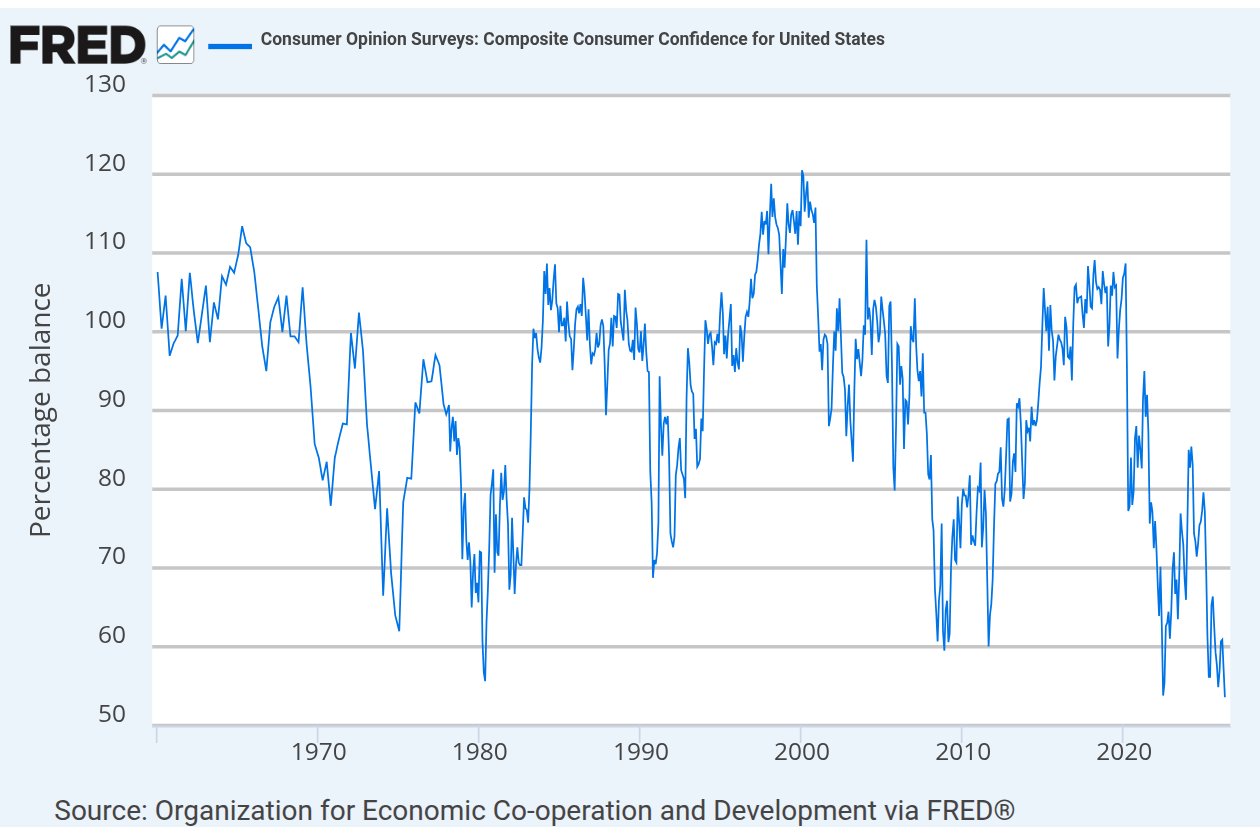
In the US, the S&P 500 is reaching new record highs, driven by AI-related stock price increases, while consumer confidence fell to its lowest level ever indexed. The unsettling and growing disparity between Main Street and Wall Street likely reflects, in part, the growing share of wealth accruing to tech stock owners as AI becomes an increasingly important engine of economic growth in the US.
Global sovereign bond yields have risen to multi-year highs. On Friday, yields on 30-year US bonds rose above 5%, to their highest levels since 2007. German 10-year bond yields reached their highest levels in 15 years. Japanese 30-year bond yields surged to their highest levels since they were first sold in 1999. The growing weakness in bond markets reflects increasing inflation risks resulting from the Iran war, in addition to rising government debt levels worldwide. Rising bond yields in Japan could start to pull some Japanese investment abroad back home and thus push global bond yields up further.
In a unanimous ruling, the US Supreme Court ruled that a trucking freight broker could be sued for arranging freight shipments using trucking companies they hired negligently, e.g., ignoring red flags. This ruling upends the freight trucking industry and could push many smaller motor carriers and freight brokers out of business and many drivers out of trucking. Insurance costs for brokers are expected to increase by a factor of 5 to 10, and some brokers may not be able to obtain insurance at all. Truckload spot rates are spiking. At least some companies with spotty track records can no longer get loads to drive as brokers are already making more careful selections. Increasing trucking freight prices are likely to drive additional inflation faced by both producers and consumers.
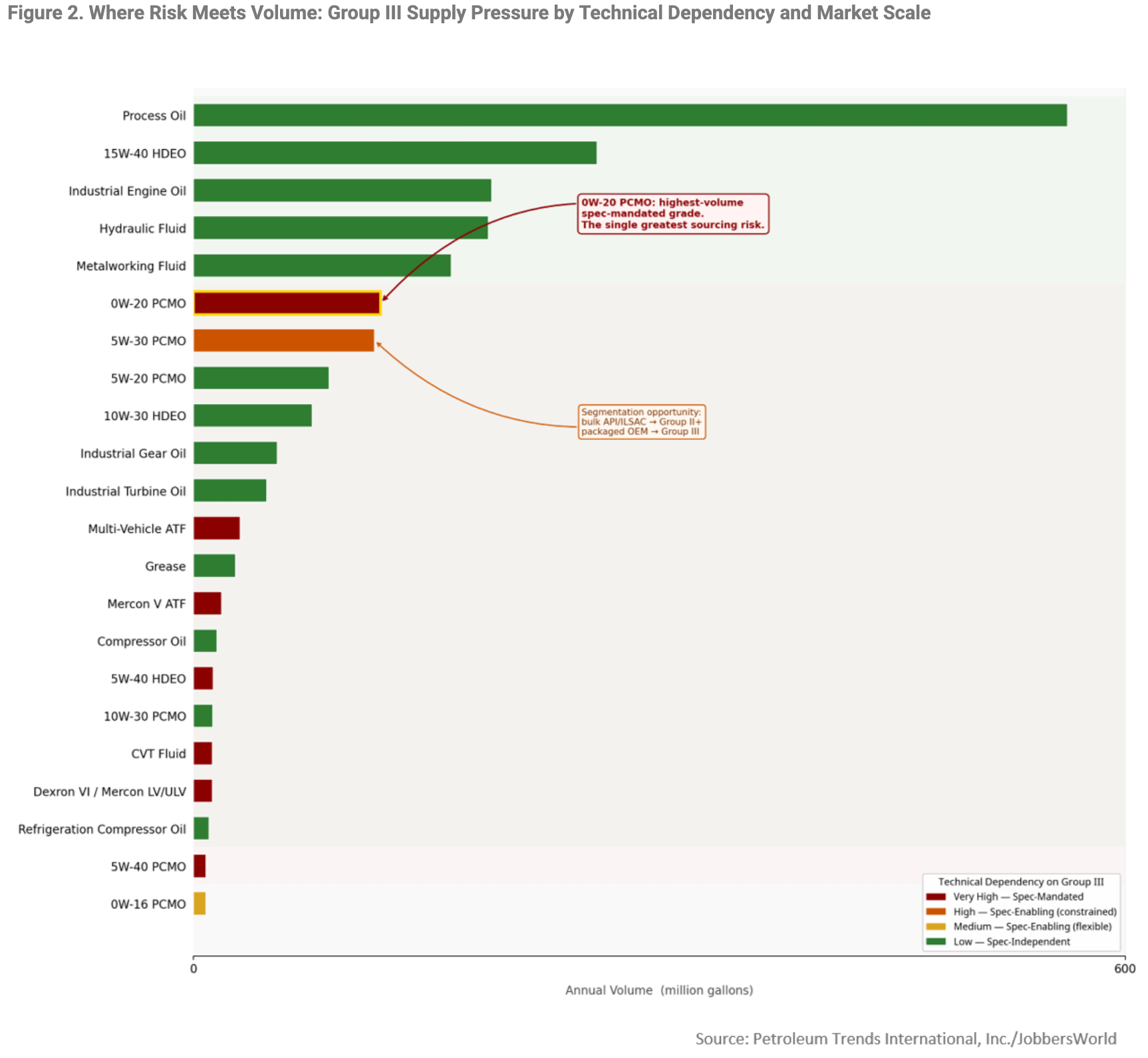
A shortage of synthetic industrial lubricants is anticipated to start affecting the US and Europe over the coming weeks. Production at the Shell Pearl GTL facility in Ras Laffan, Qatar was halted after the facility was struck by Iran in March. The Shell Pearl facility, together with far smaller facilities in the UAE and Bahrain, produced 20-30% of the world’s supply of Group III base oils. These base oils are used in a variety of applications, including synthetic motor oils and automatic transmission fluid. Lower-quality base oils can be substituted for Group III base oils in some of these applications better than in others. Shortages of products containing Group III base oils can be expected to start appearing by June and July, as retailers face losses of new supplies; price increases are expected, and some products are likely to be reformulated.
Thanks, as always highly appreciated.
> Our forecasters’ aggregate 50th percentile estimate for how many [Ebola] deaths there will be on June 13, 2026 is 208 (185 to 230).
Do you have more forecasts on this that more specifically capture the tail risks? E.g. those seem more directly informative:
P(confirmed case in a major city outside DRC and Uganda by August 1)
P(cumulative confirmed deaths ≥ 1,000 by September 1)
P(confirmed case outside Africa by September 1)
This connects with something I’ve been thinking about in the Ebola response: the difference between border-focused policy and containment at source. I wrote about this recently from a public health systems angle.
Kindly read my full article here: https://wsthhealth.substack.com/p/ebola-is-not-someone-elses-problem?r=8dds4n&utm_campaign=post&utm_medium=web