



Executive summary
Geopolitics: The US seized an Iranian cargo ship while enforcing its blockade of Iranian ports. Iran says it will not reopen the Strait of Hormuz until the blockade ends.
Will there still be ongoing hostilities between the US and Iran on November 3, 2026? Our forecasters think there’s a 20% (5% to 40%) chance.
Will the Democrats take the Senate in the US midterms? Our forecasters believe there’s a 41% (10% to 63%) probability.
Will enough US states join the National Popular Vote Interstate Compact for it to reach 270 Electoral College votes by November 7, 2028? Our forecasters think there’s a 12.5% (10% to 20%) chance.
If so, and conditional on the Supreme Court ruling on its constitutionality, will the Supreme Court rule in favour of the Compact? Our forecasters believe there’s a 35% (10% to 57%) probability.
If the Compact gets to the 270 threshold and stands before November 7, 2028, what is the probability of a US civil war by 2030? Our forecasters provide a 2% (0.5% to 7%) estimate.
If it does not, what is the probability of a US civil war by 2030? Our forecasters think there’s a 1.6% (0.45% to 3.5%) chance.
Technology and AI: Anthropic released Claude Opus 4.7, while its CEO Dario Amodei met with officials at the White House to discuss the risks associated with the company’s Mythos model.
Will there be a cyberattack/campaign that causes over $15 billion in damages by April 20, 2027? Our forecasters think there’s a 14% (5% to 25%) chance.
Will a cyberattack or cyber campaign cause the S&P 500 to close at least 27% below its pre-incident closing level at any point within the subsequent 10 US trading days before April 20, 2027? Our forecasters believe there’s a 1.6% (1% to 3.5%) probability.
Our forecasters’ aggregate 95th percentile of how much damage will be caused by a cyberattack or cyber campaign by April 20, 2027 is $78B ($10B to $300B), with a median of $100B.
Economy: The Strait of Hormuz remains largely closed. The US extended its waiver of certain sanctions on Russian oil. The UAE wants the US to backstop its economy. The head of the IEA says that Europe has about 6 weeks of jet fuel left.
Will there be a period of more than a month with free flow of shipping through the strait of Hormuz by November 3, 2026? Our forecasters think there’s a 55% (45% to 64%) chance.
You can see some of our intermediary outputs at twitter.sentinel-team.org and reddit.sentinel-team.org / reddit.sentinel-team.org/threats/ai.
Geopolitics
Middle East
The US seized an Iranian cargo ship while enforcing its blockade of Iranian ports. Iran, in turn, is refusing to reopen the Strait of Hormuz until the blockade is over, with ships coming under fire from the IRGC’s fast boats. Earlier hopes that Iran would be reopening the Strait, following statements from Trump and Iranian foreign minister Araghchi and the announcement of a 10-day ceasefire in Lebanon, were therefore quashed.
Some Iranian media outlets criticised Araghchi’s statement for giving the impression that the Strait would be opened, even though it did make clear that ships would only be allowed to use the “coordinated route”. Our forecasters view this as a sign that there are internal divisions within Iran about how to communicate their position, with IRGC-aligned officials and outlets wanting to take a more aggressive line on the conflict.
In addition, if the Strait of Hormuz were to reopen with ships having to use Iran’s “toll booth”, our forecasters would not see this as freedom of navigation having been restored. Our forecasters estimate that there is a 55% probability (45% to 64%) that the free flow of shipping in the Strait will be restored by November 3, 2026. On the one hand, Iran will want to extract financial concessions in any peace talks with the US. On the other hand, these could come in the form of sanctions relief or the unfreezing of assets. And there’s still a small chance that Iran’s regime will be toppled.
Iran said that there are “no plans” for a second round of peace talks, despite the US stating that it intends to send a delegation to Islamabad, though some Pakistani officials say they are hopeful Iran will attend. Some reports suggest that the US is considering unfreezing $20 billion in Iranian assets in exchange for Iran giving up its stockpile of enriched uranium, although an Iranian official said that this would be a “non-starter”. Russia has reportedly offered to store Iran’s uranium as part of any deal; they previously did so in 2015 and 2016 after Iran gave up 98% of its uranium stockpile under the JCPOA.
Overall, our forecasters think there’s a 20% chance (5% to 40%) that there will still be ongoing hostilities between the US and Iran on November 3, 2026, the date of the US midterm elections. On the one hand, Trump and his administration want to move on, and the last thing they want is another “forever war” in the Middle East. But on the other hand, once Middle East conflicts have lasted this long, they tend to drag on.
The Americas
The United States
The US state of Virginia joined the National Popular Vote Interstate Compact (NPVIC). Participating states pledge to hand all of their Electoral College votes to the winner of the national popular vote regardless of who wins the popular vote in the state in question. For example, in 2024, this would have meant that Virginia would have handed its Electoral College votes to Donald Trump, even though Trump did not win the popular vote in Virginia. Had this system been in place in the 2000 and 2016 elections, the Democratic Presidential candidate would have entered the White House, so the compact would be highly controversial, particularly with Republicans.
The compact would come into force if its participant states collectively hold enough Electoral College votes to reach the 270 threshold; they currently control 222. The constitutionality of such a compact is an open question. On the one hand, the Constitution gives state legislatures the right to determine how their states’ Electoral College votes are apportioned. On the other hand, interstate compacts generally require Congressional approval, though legal precedent suggests such a requirement may hinge on whether the compact infringes upon federal power.
Overall, our forecasters believe there’s a 12.5% chance (10% to 20%) that the NPVIC will reach the 270 Electoral College vote threshold by November 7, 2028. If so, and conditional on the court making a ruling, they think there’s a 35% chance (10% to 57%) that the Supreme Court will rule in favour of it. And if the NPVIC gets to the threshold and stands by November 7, 2028, forecasters think there’s a 2% probability (0.5% to 7%) of a US civil war by 2030, whereas they think there’s a 1.6% chance (0.45% to 3.5%) of this if the NPVIC doesn’t reach the threshold. Or in other words, one forecaster sees a big jump in the probability of a civil war conditional on the NPVIC getting to the threshold and standing, from 2.5% to 7%..
The Rest of the Americas
The US is reportedly ramping up military planning for Cuba. A surveillance drone was seen scouting south of Cuba. When asked whether the Pentagon is preparing for military action in Cuba and whether Cuba is next, Trump replied, “Well, it depends on what your definition of ‘military action’ is.” He also said that the US’s “strength” will bring about a “new dawn in Cuba… watch what happens”.
Venezuelan President Rodriguez is purging supporters of former President Nicolas Maduro, sometimes with the support of the Trump administration.
Asia
The US and Indonesia signed a “major defence cooperation partnership” agreement at the Pentagon. One consequence of the pact is that the US will gain greater influence over the Strait of Malacca and potentially could increase surveillance of maritime traffic through the strait. The strait is of great commercial significance to China; approximately 80% of Chinese crude oil imports transit through the strait. The US is also seeking blanket overflight access for military aircraft; that possibility is still under discussion.
Africa
The war in Sudan continues and is causing widespread human suffering.
At least 100 were killed in Nigeria after its air force accidentally fired on a market.
Economy
After a brief increase in traffic, the Strait of Hormuz remains largely closed as of Monday.
The United States renewed its waiver of certain sanctions on Russian oil, in an attempt to ease supply constraints caused by the Iran War.
The UAE has begun discussions with the US about the possibility of the US providing the country with a financial backstop, in case the Iran war pushes the country into financial crisis.
The head of the International Energy Agency said that Europe has “maybe 6 weeks of jet fuel left.”
The US is starting to refund $166B in tariffs ruled unlawful by the US Supreme Court.
Last week, the FT and The Economist both discussed how the war in Iran might cause a global food crisis that could cause millions of people to go hungry. Closure of the Strait of Hormuz and damage to key facilities in the Persian Gulf has caused a drop in the exports of fertilizers and fertilizer inputs from the gulf. Rising fuel prices also make tractor usage more expensive. Reduced availability and higher prices of both fertilizer and fuel will mean lower crop yields, less food available, and higher food prices worldwide. The Iran war has also disrupted global food trade flows, as the UAE was until recently a global food re-export hub. Many countries that are expected to be hit hardest by rising food costs are also dealing with rising debt-servicing costs simultaneously and will be less able to fund subsidies or other social welfare programs.
Technology and artificial intelligence
Anthropic has launched Claude Opus 4.7, its newest frontier AI for public use. It performs better than Opus 4.6 on most benchmarks, especially on coding, although it performs ever so slightly worse on CyberGym, a benchmark for cyberhacking. One forecaster hopes, therefore, that it will not significantly advance the frontier of AI-assisted cyberhacking, in the way that public deployment of their recently announced Claude Mythos would.
Opus 4.7 is a less capable model than Claude Mythos, which Anthropic have said is too dangerous to release. Anthropic’s CEO Dario Amodei met with officials at the White House on Friday to discuss working together, following the wave of concern over Mythos, despite the US government designating Anthropic a “supply-chain risk”.
The Bank of England said it is testing AI risks to the financial system, in a letter published to lawmakers on Thursday, and German banks have been examining the risks, too.
Given these and other developments, our forecasters think there’s a 14% (5% to 25%) chance that there will be a cyberattack or cyber campaign that causes over $15 billion in damages by April 20, 2027. Forecasters highlighted three cyberattacks from the popularization of email in the early 2000s as examples from the historical record of reaching the $15B threshold.
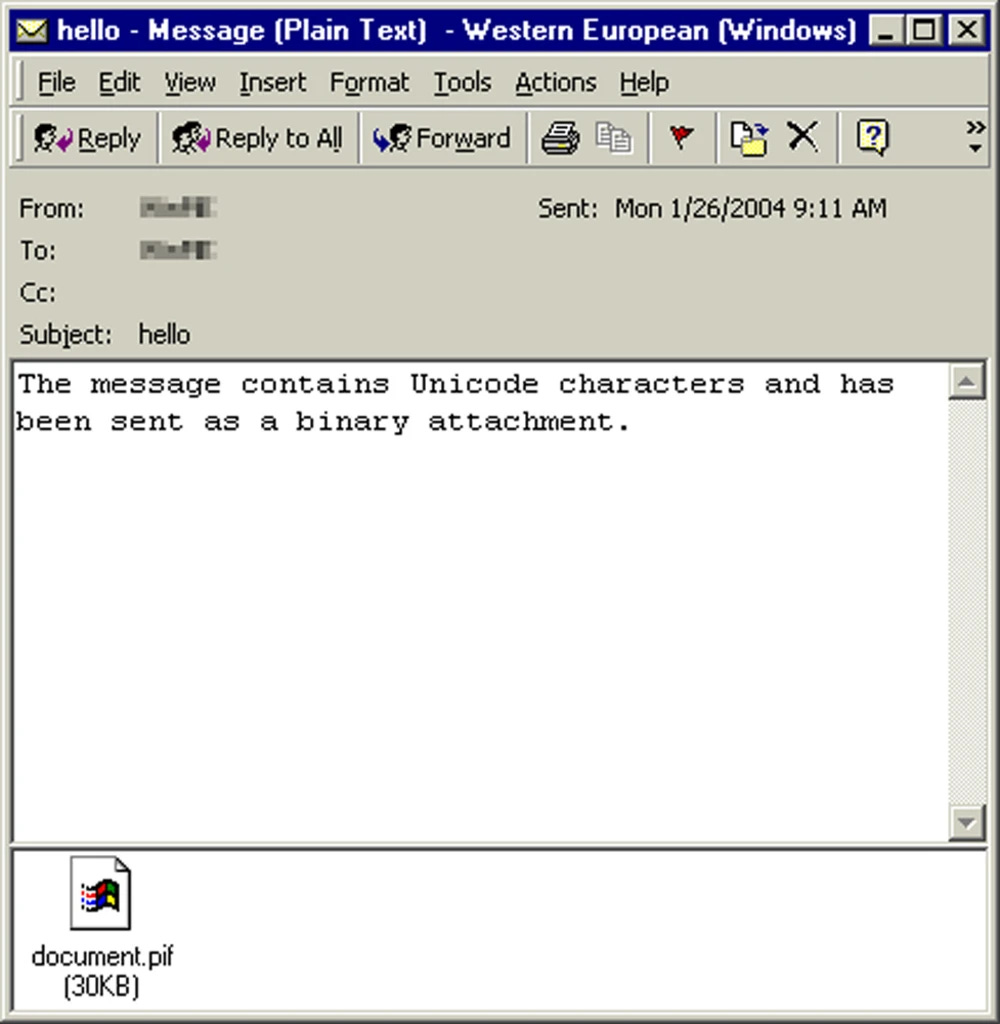
They also think there’s a 1.6% (1% to 3%) probability that a cyberattack or cyberattack campaign will cause the S&P 500 to close at least 27% below its pre-incident closing level at any point within the subsequent 10 US trading days before April 20th 2027.
And our forecasters’ aggregate 95th percentile estimate of how much damage will be caused by a cyberattack or cyber campaign by April 20, 2027 is $78B ($10B to $300B), with the median at $100B. That is, forecasters assign a 5% to at least that much damage done through a cyberattack in the next year.
In an interview earlier in the week, Trump said in response to a question about whether there should be government AI safeguards, and a killswitch for some AI agents, that he thought there should be.
OpenAI announced GPT-5.4-Cyber, its own cybersecurity AI, which they are providing trusted access to.
As we reported last week, OpenAI recently backed a bill in Illinois that would largely let AI developers off the hook for the worst possible actions that AI systems could take, including mass deaths and financial disasters. Anthropic has come out against the bill.
Although the European Union has extensive regulations in place for AI and digital technologies, some argue that the bloc appears less concerned about those rules being applied in other countries.
Zelensky claimed that Ukraine’s military robots captured a Russian Position without soldiers or losses. It has been military dogma that infantry are required to seize and hold territory. For the first time in the history of warfare, to the best of our knowledge, it appears that this fundamental axiom of warfare has been superseded. (While territory has previously been ceded following naval strikes or airstrikes, military presence on the ground typically follows; even then, infantry are needed to hold territory.) The implications of this development are far-reaching. With growing robotics and AI capabilities, this capability is likely to expand to more state and potentially eventually non-state actors, and technical capabilities to seize and hold larger and more complex territories are likely to grow dramatically over the coming years.
If there's a ~50% chance the straight of hormuz will remain closed until Nov, I'd expect European gas prices to be higher. Any thoughts on why there's a discrepancy?
https://www.ice.com/products/27996665/Dutch-TTF-Natural-Gas-Futures/data?marketId=6277389&span=2
What do you think the odds are that the Zelenskyy statement is true in the way you’re talking about it?